
Walkway Contractor in Northern Virginia
If your house was built by a production builder, there's a good chance the front walk is the same narrow strip of plain concrete that went into every other house on the street. It does the job and nothing else.
That strip is also the first thing every guest, buyer and delivery driver touches. Widening it, changing the material, or giving it a curve that follows the grade instead of cutting straight across it changes how the whole front of the house reads — usually for less than people assume.
We design each walk around the house it serves and install with methods that hold up: proper base, proper edge restraint, proper drainage. We build walkways across Arlington, Fairfax, Loudoun and Prince William counties.
How Your Walkway Gets Built
01
Design & Layout
We look at the space, work out placement and scale, and go through style, color and texture options.
02
Written Proposal
Design, materials and price on paper before anything is ordered.
03
Excavation & Base
Existing surface removed, then a compacted base built for the soil and the traffic it carries.
04
Installation & Finish
Surface set or poured, edges restrained, joints finished and the site cleaned.
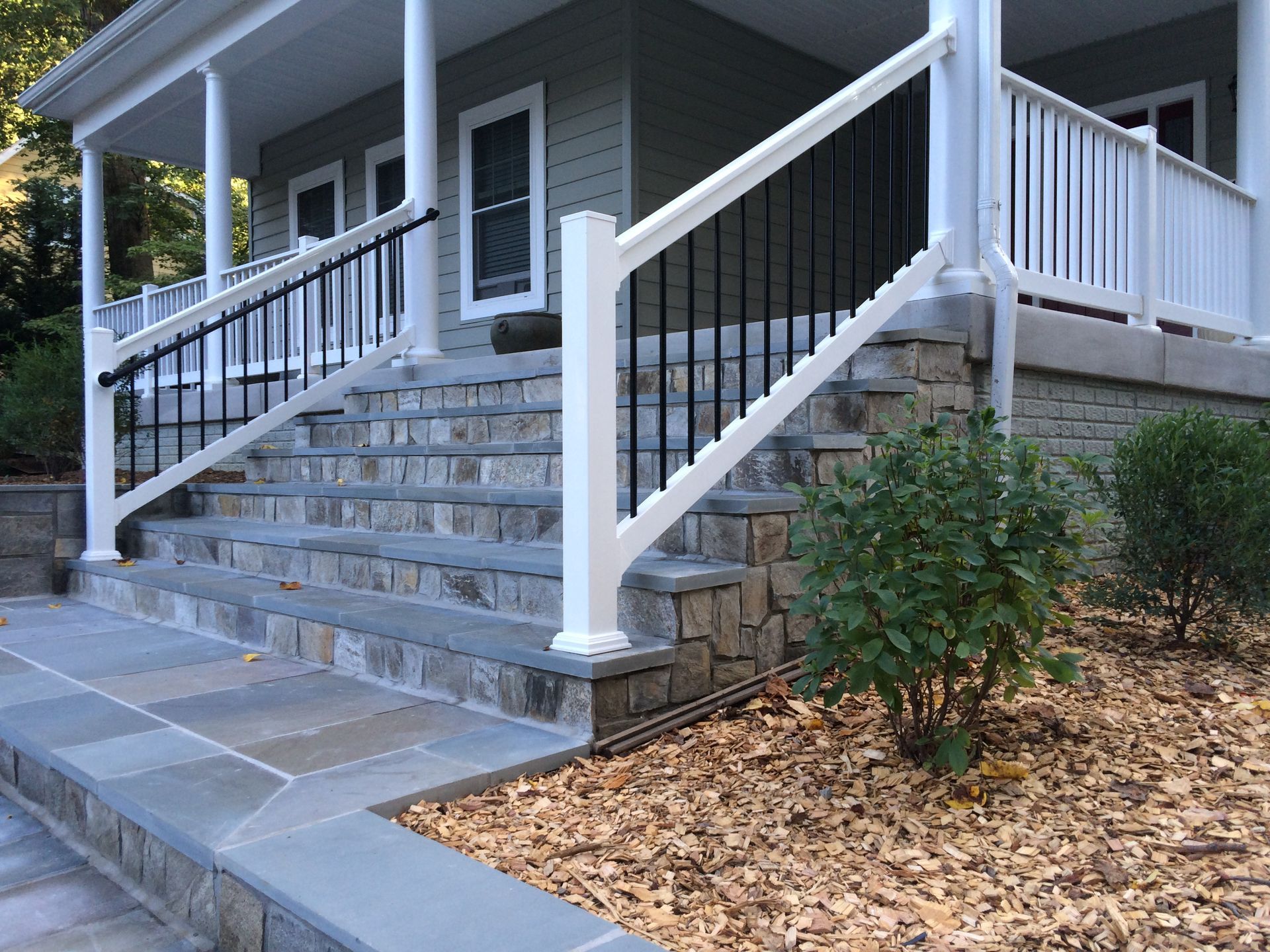
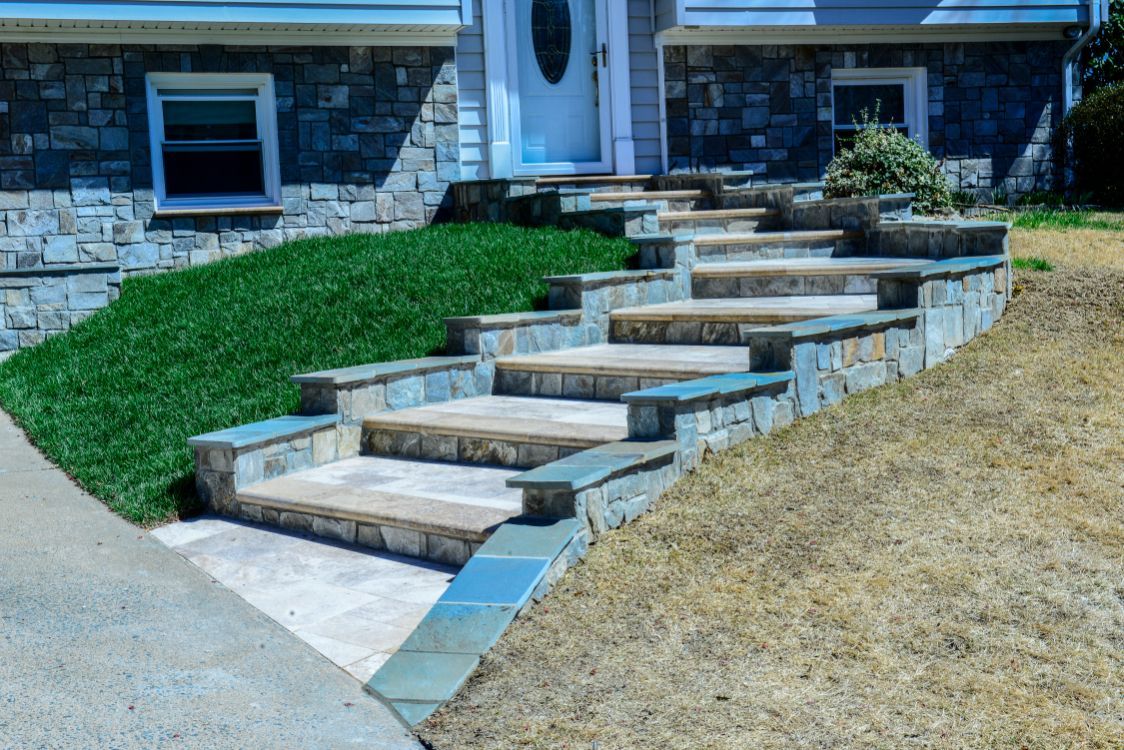
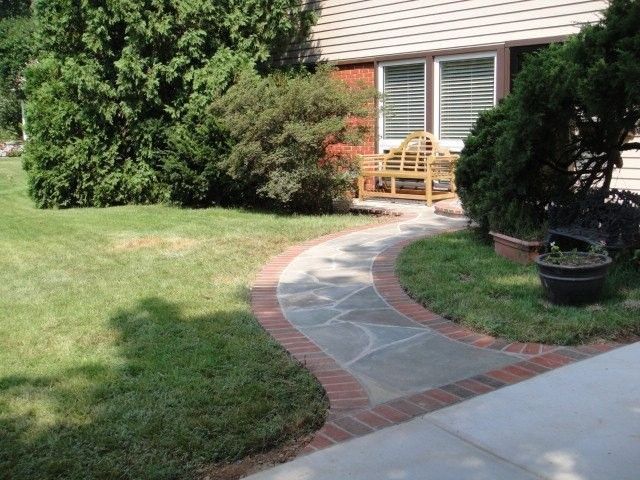
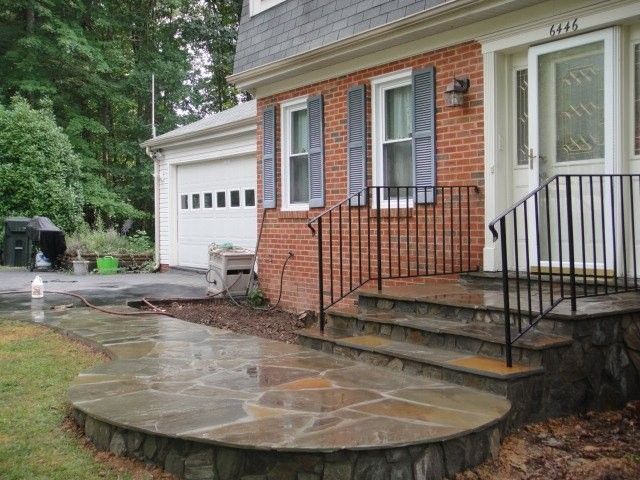
Our Walkway Projects
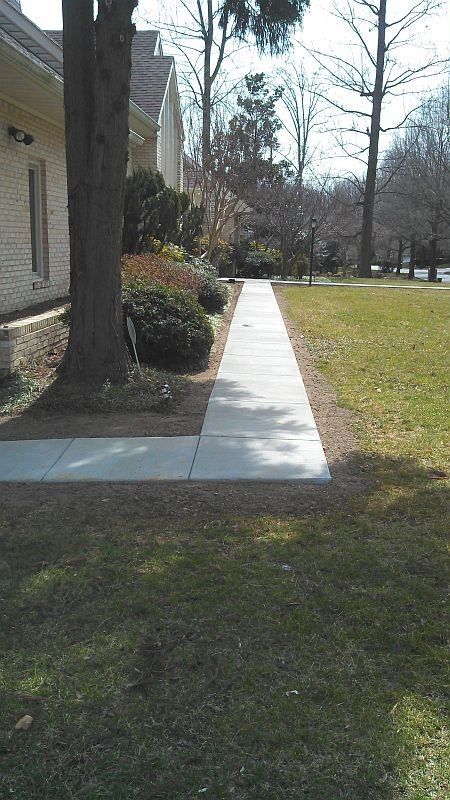
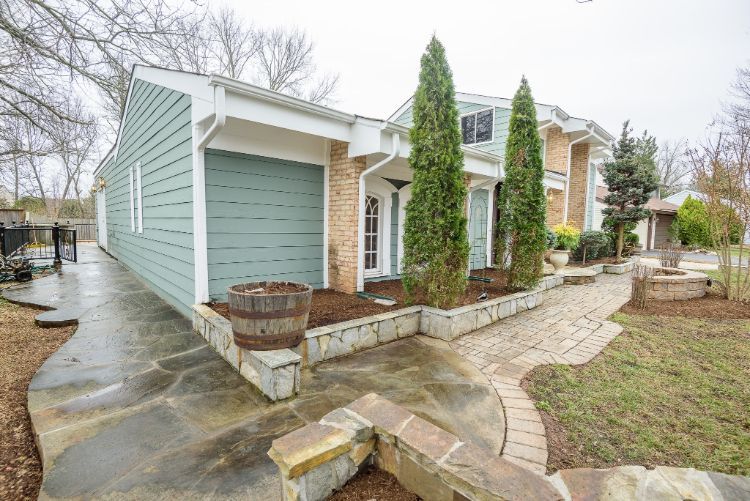
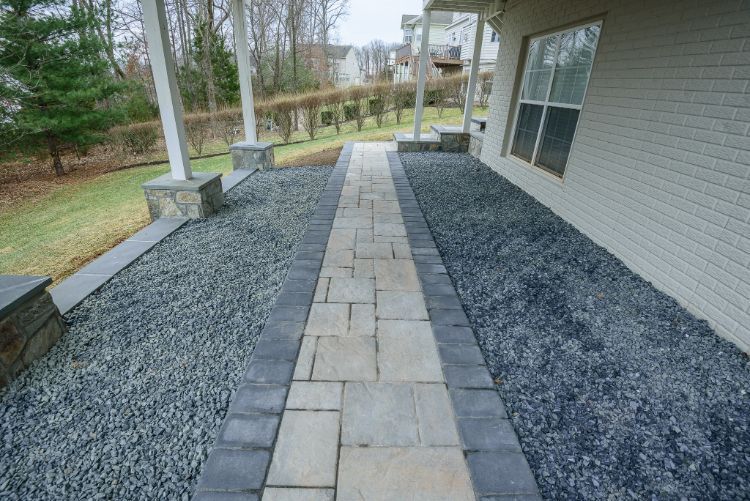
Choosing Your Walkway Material
We also combine materials — a paver field with a brick border, say — and we can cap an existing walkway rather than tearing it out when what's underneath is still sound.
Clay Brick Pavers
Warm color that holds up for decades and suits traditional and colonial elevations.
Square-Cut Flagstone
Clean, formal lines with natural stone variation, well suited to a straight run to the door.
Irregular Flagstone
A looser, more organic look that works through gardens and along curved paths.
Interlocking Concrete Pavers
The widest range of colors and shapes, and individual units can be lifted and reset if anything shifts.
Travertine
A lighter, softer surface underfoot that stays cooler in direct sun.
Decorative Concrete
Poured and finished as colored, stamped or micro-exposed concrete for a seamless surface with pattern and texture.
Signs Your Walkway Needs Replacing
- Sections that have heaved, settled or cracked apart
- A lip or uneven joint people catch a toe on
- Pavers or stones that rock when you step on them
- Weeds and washed-out sand filling the joints
- Water crossing the path or pooling on it after rain
- Ice forming in the same spot every winter
- A path so narrow two people can't walk it side by side
Most settling and heaving traces back to the base rather than the surface. Resetting stones over the same failing base buys a season; rebuilding it properly ends the problem.
FAQs
How much does a walkway cost?
Length, width, material and how much demolition is involved drive the number. Capping sound concrete costs less than a full tear-out and rebuild, so we price after seeing what's there.
How long does installation take?
Most front walks take a few days. Longer paths, heavy demolition or difficult access can push it to a week or more.
Can you cover my existing concrete walk?
Often yes. If the slab is sound and at a workable height, capping it with pavers or stone is a faster and cheaper route than removing it. We'll tell you on site whether yours qualifies.
Do I need a permit or HOA approval?
Walkways often don't require a county permit, but many neighborhoods here require architectural review before exterior changes. We confirm what your address needs before starting.
What holds up best through winter?
All of these do when the base is built right. Freeze-thaw damage is almost always a drainage and base problem rather than a material one.
Get an Walkway Estimate Today
Tell us where the path runs and what you'd like it to look like. Estimates are free.